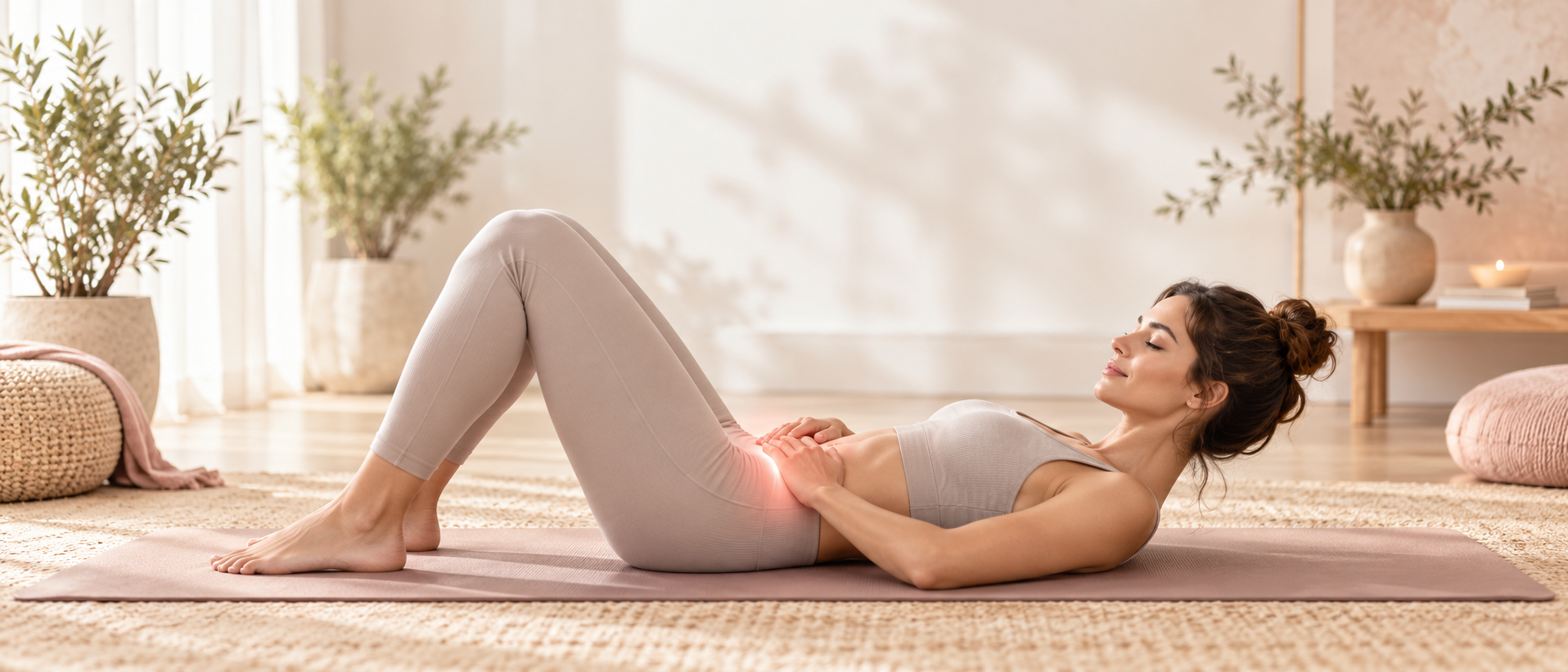
Pelvic floor exercises: is squeezing enough?
When people hear “pelvic floor exercises”, they usually think of one thing: Squeeze. Hold. Relax. Repeat. And yes — learning to contract these muscles can be useful. But a well-functioning pelvic floor needs more than just the ability to squeeze hard.
First, you need to find the right muscles
The pelvic floor is hidden inside the body, so unlike your arms or legs, you cannot simply look at the muscle you are trying to train. That means some people are not completely sure whether they are contracting the right area. Instead of activating the pelvic floor, they may tense their stomach, buttocks or thighs. So the first challenge is not always strength. Sometimes it is simply awareness and control.
The muscles also need to relax
A healthy pelvic floor should not stay tight all the time. It needs to contract when support is required — but it also needs to relax properly. For example, relaxation is important when going to the toilet. This is why pelvic floor training is not just about making the muscles stronger. It is about teaching them to contract, relax and respond appropriately.
Timing matters too
Think about what happens when you cough, sneeze, jump or lift something heavy. Pressure inside the abdomen suddenly increases. The pelvic floor should respond at the right moment to help provide support. So good pelvic floor function involves more than strength. It also involves timing and coordination.
What about Kegel exercises?
Kegel exercises are probably the best-known form of pelvic floor training. They usually involve intentionally tightening and relaxing the pelvic floor muscles. When performed correctly and consistently, they can be a useful way to improve awareness, control and strength. The difficulty is that these muscles are not always easy to isolate. Some people struggle to feel the contraction, others find it difficult to maintain it, and some simply forget to train regularly.
Like any muscle, consistency matters. Doing a few contractions once in a while is unlikely to create much change. Muscles respond to repeated training. That means pelvic floor training usually requires regular practice over time, just like training any other muscle group. And it is not only about making each contraction stronger. The goal is better strength + control + coordination.
There is more than one way to train the pelvic floor
Traditional exercises are one option. But today there are also technologies designed to stimulate repeated pelvic floor muscle contractions without requiring you to consciously perform every contraction yourself.
And that leads to an interesting question: What actually happens when technology trains the pelvic floor for you?