What does pressure actually change?
We already know that our body needs oxygen.
So if we breathe oxygen all day anyway, what difference does pressure actually make?
Quite a big one.
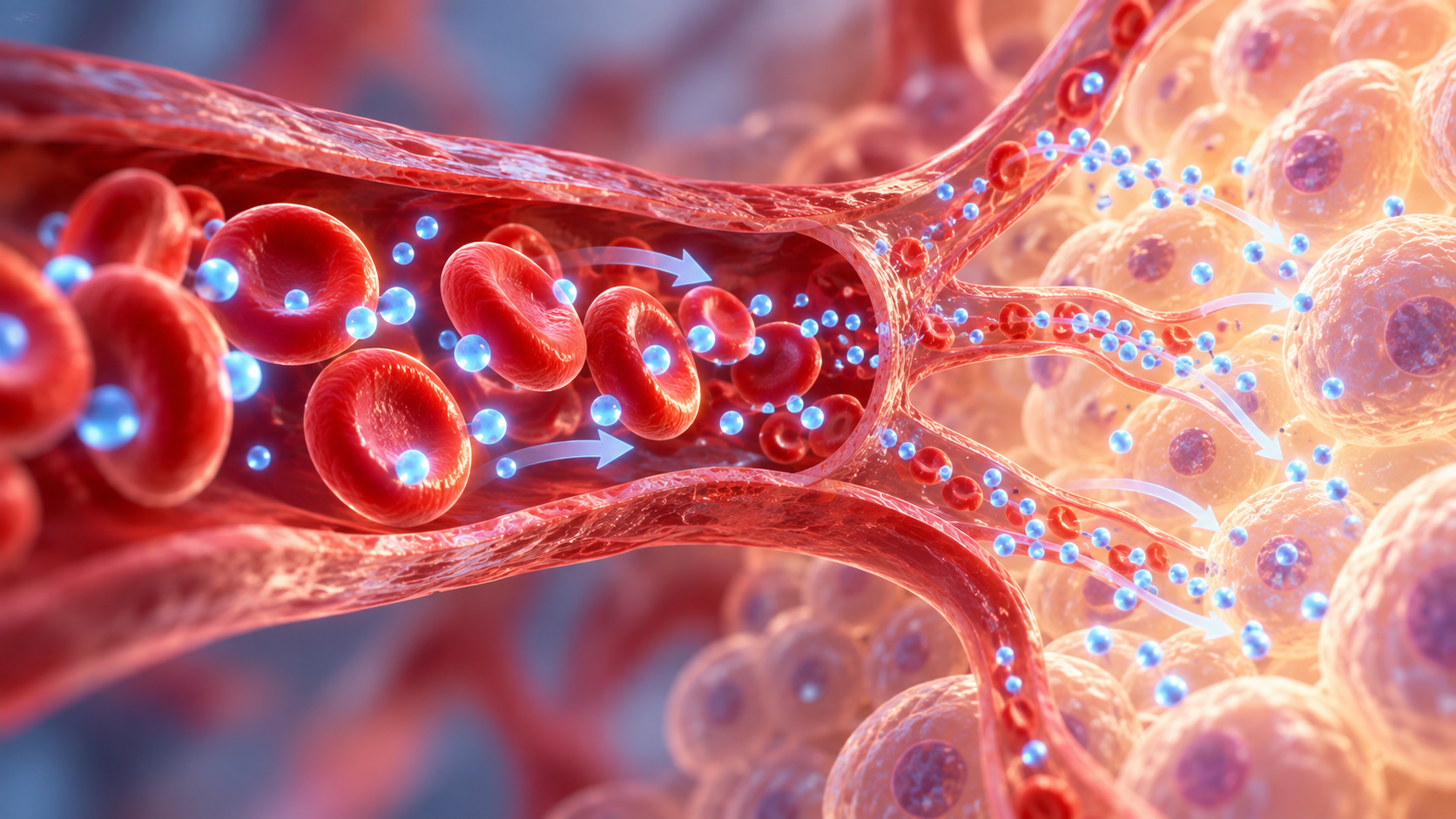
Under normal conditions, most oxygen travels around the body attached to haemoglobin inside red blood cells.
And in a healthy person, haemoglobin is already usually carrying close to the amount of oxygen it can hold.
But when we breathe oxygen under increased pressure, something different happens:
more oxygen can dissolve directly into the plasma — the liquid part of our blood.
Why does that matter?
Sometimes oxygen delivery to an area of tissue can become more difficult.
After an injury or surgery, for example, swelling, damaged small blood vessels or reduced blood flow can affect how much oxygen reaches the surrounding tissue.
Think of it a little like delivering parcels.
Large delivery vans are brilliant when the roads are clear.
But if the route becomes narrow or difficult, having smaller delivery vehicles can help get parcels further along the journey.
Our red blood cells are like the main delivery vans — they carry most of our oxygen.
Oxygen dissolved in plasma gives the blood an additional way of carrying oxygen, and the higher oxygen pressure also increases the gradient that helps oxygen move from the blood into surrounding tissues.
It is not a perfect comparison, of course, but it makes the idea much easier to picture.
So pressure changes more than you might think
It is not simply about putting more oxygen into your lungs.
Increased pressure changes how much oxygen can dissolve in the blood and how readily it can move from the blood towards the tissues.
And that is the key idea behind hyperbaric oxygen:
oxygen + pressure.
Two things we already know individually — but when combined, oxygen behaves differently.