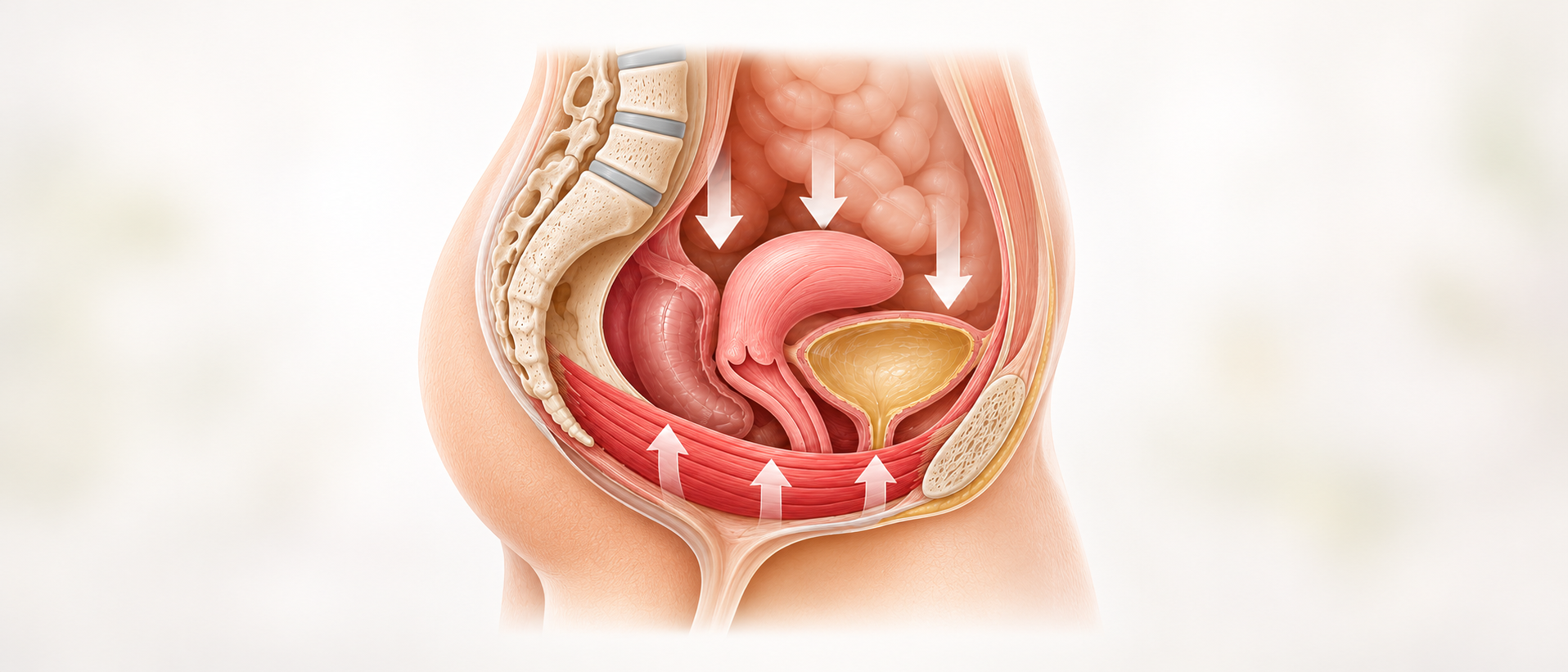
Why can your pelvic floor become weaker?
Pelvic floor problems do not usually appear for just one reason. These muscles can change gradually over time — sometimes because of pregnancy or surgery, sometimes because of age, hormones, pressure inside the abdomen or simply years of everyday strain. And importantly, weakness is not always something you can see or feel straight away.
Pregnancy and childbirth
Pregnancy places additional pressure on the pelvic floor as the body supports increasing weight. Childbirth can then stretch the muscles and surrounding tissues even further. For some people, strength and control return naturally. For others, symptoms such as leaking, urgency or a feeling of reduced support can remain long after pregnancy.
Ageing and menopause
Like other muscles in the body, the pelvic floor can change with age. Hormonal changes around menopause can also affect the tissues that support the bladder, urethra and pelvic floor. This is one reason some women first notice bladder changes or reduced pelvic floor control later in life — even if they never had problems after childbirth.
Surgery
Pelvic or abdominal surgery can affect the way pelvic floor muscles function. This can be relevant after procedures involving the uterus, bowel, bladder or prostate. The muscles themselves may not necessarily be damaged, but surgery can change strength, coordination, sensation or the way different parts of the core work together.
Constipation and repeated straining
Regularly straining to open the bowels increases pressure on the pelvic floor. When this happens repeatedly over months or years, it can place additional stress on the muscles and supporting tissues. The same principle applies to repeated heavy lifting or activities that consistently create high pressure inside the abdomen.
Coughing, lifting and high-impact activity
Every time you cough, sneeze, jump, run or lift something heavy, pressure inside the abdomen increases. A well-functioning pelvic floor responds automatically to help support the body. But if the muscles are already weaker or poorly coordinated, repeated pressure can make symptoms more noticeable.
And men are affected too
Pelvic floor weakness is not only associated with pregnancy or childbirth. Men can experience changes in pelvic floor function with age and particularly after prostate-related surgery.
This may affect urinary control, pelvic stability and sexual function.
Sometimes the issue is not simply weakness. This is important. Pelvic floor problems do not always mean the muscles are too weak. In some people, the muscles can be too tense, poorly coordinated or unable to relax properly. That is why simply trying to squeeze the pelvic floor as hard as possible is not always the right solution.
A healthy pelvic floor needs strength, control and coordination. Small symptoms can be easy to ignore. A little leak during exercise. Going to the toilet “just in case”. Suddenly struggling to hold urine as long as before. Many people adapt to these changes without realising that their pelvic floor function may have changed.
But these symptoms are not just about getting older.
They can be signs that the muscles supporting the pelvis are no longer working quite as effectively as they once did.